

“Aging can be defined as the time-related deterioration of the physiological functions necessary for survival and fertility.”
From Developmental Biology, 6th edition (Gilbert, 2000)
“At the biological level, aging results from the impact of the accumulation of a wide variety of molecular and cellular damage over time. This leads to a gradual decrease in physical and mental capacity, a growing risk of disease and ultimately death.”
From WHO (https://www.who.int/news-room/fact-sheets/detail/ageing-and-health)
“Aging is the process of becoming older. In humans, aging represents the accumulation of changes in a human being over time and can encompass physical, psychological, and social changes. Aging increases the risk of human diseases such as cancer, Alzheimer’s disease, diabetes, cardiovascular disease, stroke and many more.”
From Wikipedia (https://en.wikipedia.org/wiki/Ageing):
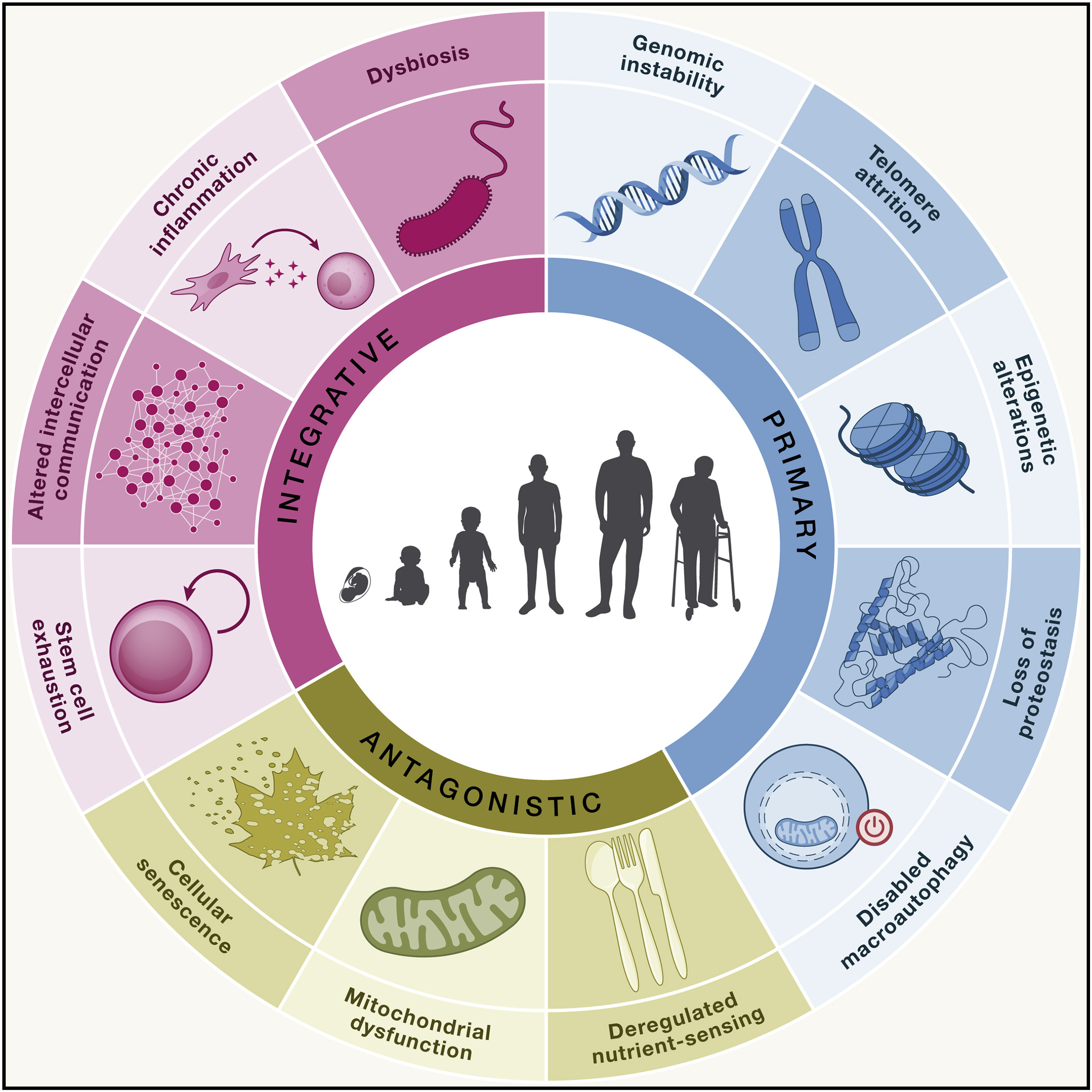
The distinction among ‘‘hallmarks’’ is intrinsically diffuse, since they interact and are not independent of each other. Therefore, their classification is inevitably arbitrary. It was proposed that the following three criteria must apply for each hallmark of aging (López-Otín et al., 2023):
The following are the latest list of 12 aging hallmarks (López-Otín et al., 2023):
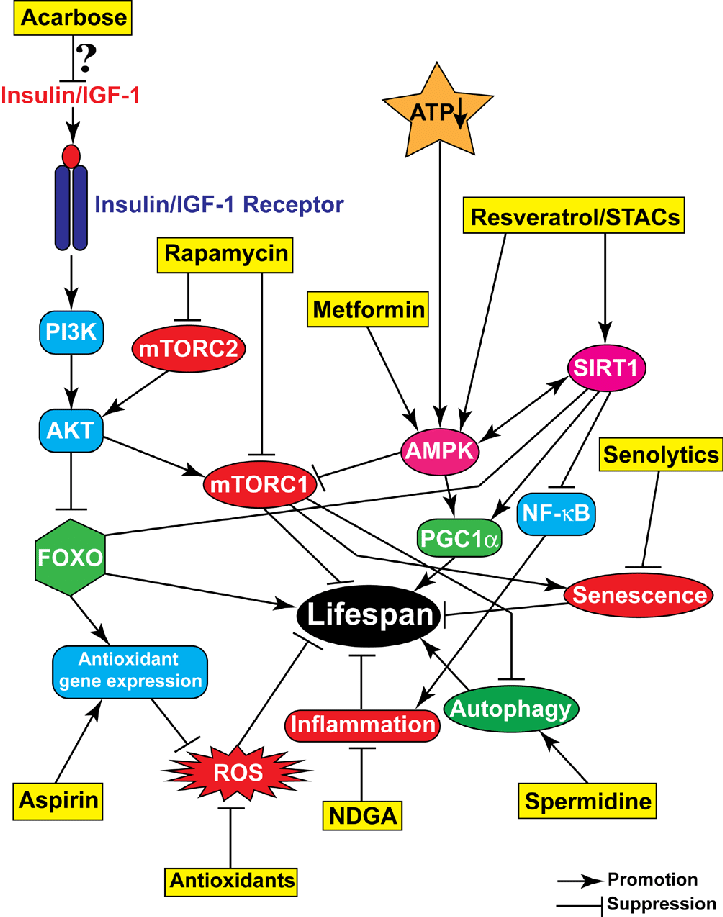
The twelve hallmarks of aging collectively encompass the major molecular, cellular, and systemic processes that drive organismal aging. Over the past several decades, extensive efforts worldwide have sought to develop interventions targeting each of these hallmarks with the goal of delaying aging, improving healthspan, or the prevention/treatment of age-related diseases. Below are summarized representative examples of experimental and preclinical interventions corresponding to each hallmark.

Approaches targeting the hallmarks of aging offer valuable strategies for addressing molecular damage and dysfunction across distinct pathways. However, interventions focused on selected processes may not fully restore the coordination of broader biological programs that sustain cellular function. This limitation motivates a complementary focus on rejuvenation: exploring how coordinated biological mechanisms might restore a more youthful cellular state. The occurrence of rejuvenation in nature provides a biological rationale for investigating this possibility.
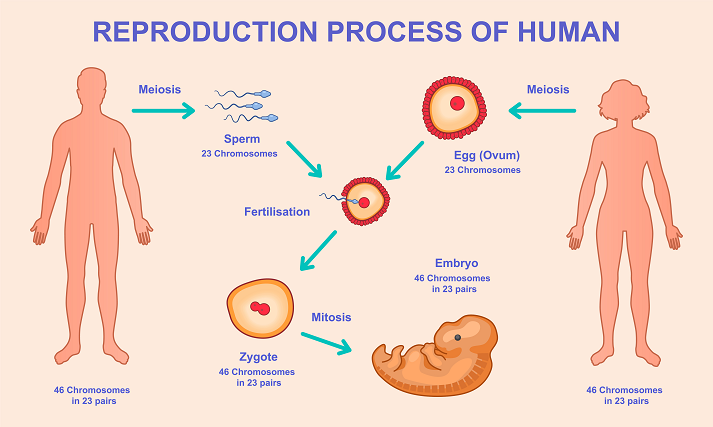
In all sexually reproducing organisms, a profound rejuvenation event occurs during reproduction. The fusion of sperm and oocyte gives rise to a zygote that is biologically young, despite originating from aged parental cells. During early embryogenesis, accumulated age-associated epigenetic marks are erased, transcriptional noise is reduced, and cellular identity undergoes global reprogramming. Recent studies have demonstrated that epigenetic aging clocks reset to near zero during this developmental window, effectively restoring a youthful cellular state (Kerepesi et al., 2021). Consequently, offspring inherit their parents’ genetic information while remaining largely free of the cellular aging burden accumulated across the parental lifespan, thereby ensuring species continuity across generations.
This observation raises a fundamental question: if highly coordinated and robust rejuvenation programs exist and are repeatedly executed with remarkable fidelity during reproduction, why is it not activated in somatic tissues as organisms age?
One plausible explanation lies in evolutionary optimization. Natural selection acts primarily to maximize reproductive success and species persistence, rather than individual longevity. Under conditions of finite resources and persistent environmental risk, deploying powerful rejuvenation mechanisms broadly in somatic tissues may confer limited evolutionary advantage while increasing the risk of adverse outcomes such as uncontrolled proliferation or tumorigenesis. As a result, rejuvenation programs appear to be developmentally and epigenetically gated.
From this perspective, aging is not solely the consequence of cumulative molecular damage but also the result of evolutionarily enforced suppression of higher-order, coordinated gene regulatory programs —- the rejuvenation programs that maintain cellular function and resilience, as well as rejuvenation. This provides a rationale for investigating whether these mechanisms can be selectively engaged in adult cells to reverse multiple age-associated changes. Such rejuvenation strategies could complement hallmark-directed interventions by seeking to restore coordinated regulation across multiple biological processes.
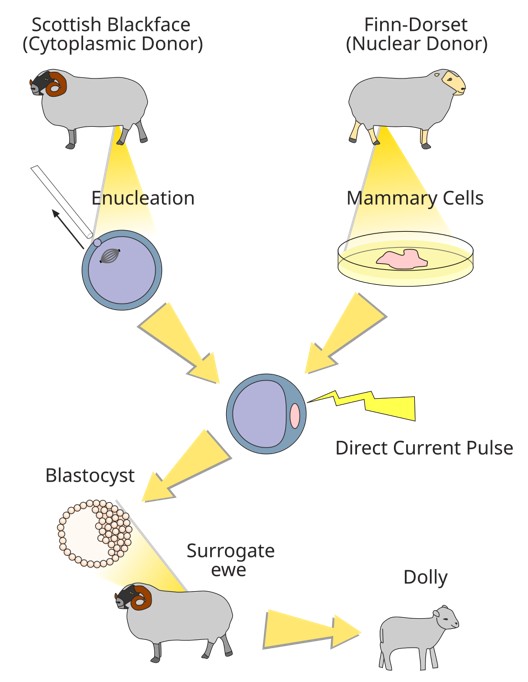
The journey toward rejuvenation began in the early 1960s when John Gurdon and his collaborators discovered animal cloning in frogs (Gurdon, 1962). Three decades later, in 1996, mammalian cloning was achieved with the birth of Dolly the sheep (Campbell et al., 1996), followed by the cloning of other mammalian species. These breakthroughs demonstrated that the cytoplasm of a mature oocyte contains molecules capable of reprogramming a somatic nucleus into an embryonic state, enabling the development of a new organism. Scientists hypothesized that the oocyte’s cytoplasm must contain a complex constellation of reprogramming factors essential for resetting cellular age. But what are those factors in the oocyte’s cytoplasm that caused the reprogramming?
Humans have approximately 20,000 protein-coding genes, but the total number of genes, including non-coding RNA genes, is much higher, with some estimates exceeding 46,000 (Amaral et al., 2023). Even when restricted to protein-coding genes, the number of possible combinations involving two to six genes out of approximately 20,000 amounts to 8.88 × 10²². Such an astronomical number far exceeds the capacity of current experimental or computational approaches to be tested exhaustively. What makes this task more complicated is that some genes in a combination need to be over expressed, and some need to be inhibited, and sometime need to be spatially and timely regulated.
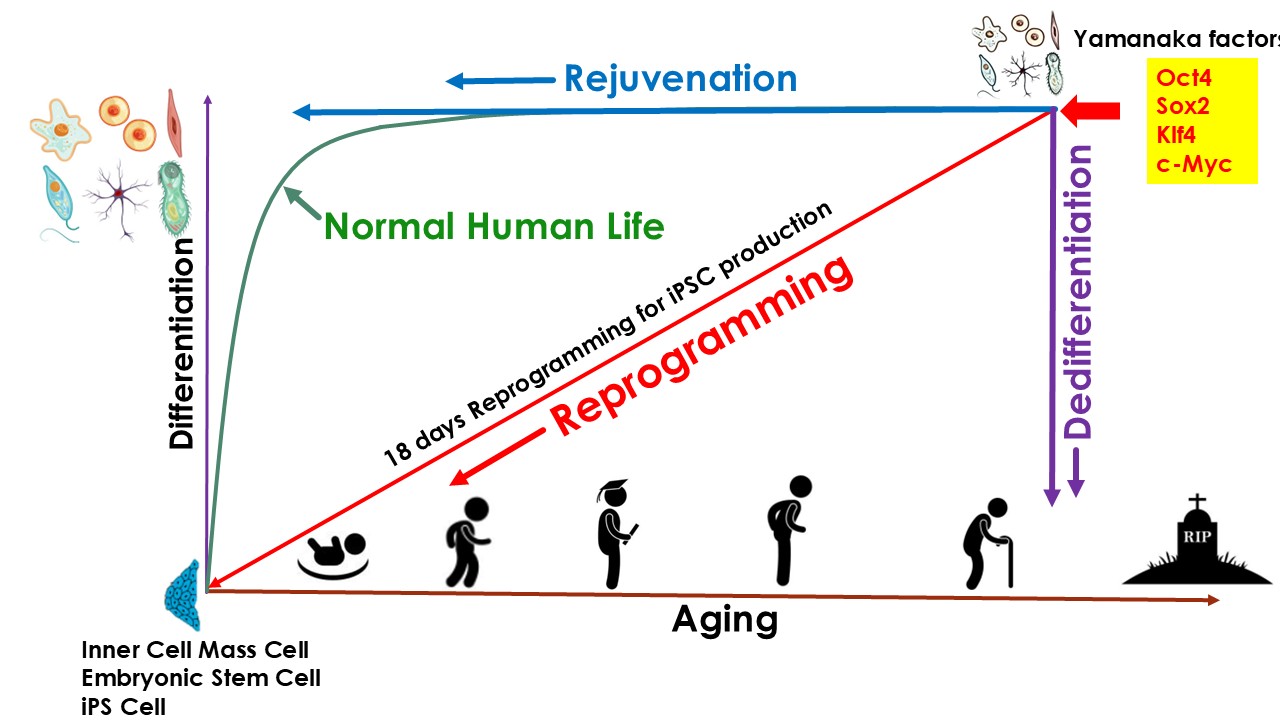
Thanks to the discovery of induced pluripotent stem cell (iPSC) technologies in 2006 by Yamanaka (Takahashi & Yamanaka, 2006), who, because of it, got Nobel Prize in 2012, scientists know that only 4 genes (Oct4, Klf4, Sox, and Myc) (OKSM), so called Yamanaka factors, can reprogram somatic cells into iPSC cells. iPSC reprogramming represents the most robust experimentally validated example of cellular rejuvenation by using defined factors. Multiple studies have shown that reprogramming aged or senescent somatic cells to pluripotency effectively resets epigenetic age, restores youthful transcriptional programs, and reverses several hallmarks of cellular aging. Though iPSC reprogramming successfully rejuvenated cells, it also caused dedifferentiation of the cells, thus the cells lost their original phenotype. In other words, the rejuvenation and differentiation are coupled during the iPSC reprogramming process. As a result, iPSC technologies cannot be used directly in the body for rejuvenation purposes, because it could cause teratoma or other type of tumors in the body (Liu, 2008). However, there are still a lot of achievements on rejuvenation applications based on iPSC technology. One of the most important achievements is called Partial Reprogramming:
This is to initiate reprogramming with OSKM, interrupt the process at an intermediate state, and allow cells to return to their original identity. This transient cellular perturbation, known as “partial” reprogramming, is able to rejuvenate cellular markers of aging such as the DNA methylation clock, DNA damage, epigenetic patterns, and aging-associated changes in the transcriptome, both in vitro and in vivo. Upon interruption of partial reprogramming, cells re-stablish their original epigenetic and transcriptional status in a process of re-differentiation that, interestingly, does not re-stablish the erased aging-associated changes and therefore resets the epigenome and transcriptome to a younger state. (Browder et al., 2022; Ocampo et al., 2016; Olova et al., 2019). Various in vivo, in vitro studies have explored partial reprogramming strategies, including approaches based on transient mRNA delivery or tightly controlled expression of canonical reprogramming factors. These studies demonstrate that partial reprogramming can induce certain rejuvenative effects while avoiding full pluripotency.
Partial reprogramming remains sensitive to treatment duration and cellular context, with some protocols transiently disrupting cell identity. Epigenetic age reduction alone does not establish comprehensive rejuvenation. Toxicity observed under prolonged systemic OSKM expression further underscores the need to define safe treatment regimens and evaluate long-term outcomes (Eom et al., 2026; Gill et al., 2022).
Recent studies have strengthened evidence that cellular aging can be reversed without full reprogramming to pluripotency. In June 2025, Shift Bioscience reported that its proprietary single factor, SB000, reduced transcriptomic and DNA-methylation age in human fibroblasts and keratinocytes while preserving measured aspects of somatic identity (de Lima Camillo et al., 2025). In January 2026, researchers associated with UCSF and Junevity used Perturb-seq in an aging-fibroblast model to identify individual transcription-factor perturbations—including activation of E2F3 or EZH2 and repression of STAT3 or ZFX—that improved multiple age-associated cellular phenotypes, with selected in-vivo validation (Sengstack et al., 2026). These results represent important advances, but both studies principally pursue target- or perturbation-first discovery and ultimately prioritize individual regulators. They may not fully determine the coordinated control program required to maximize age reversal while simultaneously maintaining lineage identity, specialized function, durability and safety.
We are developing a trajectory-informed, combination-aware platform to identify the minimal sufficient combination of regulatory genes whose combined, cooperative activity can drive multidimensional, stable, and high-magnitude cellular rejuvenation while preserving the cell’s original identity.
Full somatic-cell reprogramming is the essential biological foundation and starting point of Rejuve’s approach. It provides the most comprehensive validated demonstration that a small set of defined factors can profoundly reset cellular age to near-zero. No other defined-factor intervention has demonstrated a comparably deep and broad cellular rejuvenation. The fundamental limitation is that full reprogramming achieves this reset by inducing dedifferentiation and erasing the cell’s original identity. Rejuve therefore begins with the proven rejuvenating power of reprogramming and seeks to mechanistically decouple rejuvenation from dedifferentiation—preserving the depth of the age reset while maintaining the cell’s original lineage identity and specialized function.
A key biological observation supports the conceptual separability of these processes. In humans, a fertilized zygote develops into a fully differentiated neonate within approximately 40 weeks, generating nearly all somatic cell types of the adult organism. During this developmental interval, extensive cellular differentiation occurs, yet biological aging has scarcely begun. This temporal dissociation suggests that cellular differentiation and biological aging are governed by largely independent biological programs. If differentiation can proceed without aging during development, then rejuvenation need not be intrinsically linked to dedifferentiation.
This raises a fundamental question: why are rejuvenation and dedifferentiation tightly coupled during iPSC reprogramming, despite being separable during natural development?
We hypothesize that the coupling between rejuvenation and dedifferentiation observed during induced pluripotent stem cell (iPSC) reprogramming is not a biological necessity, but rather a consequence of the pleiotropic and upstream positioning of canonical reprogramming factors within the gene regulatory network. The Yamanaka factors (OCT4, SOX2, KLF4, and c-MYC), together with additional pluripotency-associated regulators (Yu et al., 2007), function as high-level transcriptional and epigenetic remodelers. They bind to thousands of genomic loci, recruit chromatin-modifying complexes, alter histone modifications (e.g., H3K27ac, H3K4me3), promote widespread chromatin accessibility changes, and reorganize three-dimensional genome architecture. These activities collectively reset transcriptional programs governing cell identity.
Importantly, many age-associated molecular features—such as epigenetic drift, altered DNA methylation patterns, transcriptional noise, heterochromatin loss, impaired DNA damage response, and metabolic rewiring—are embedded within the same chromatin and transcriptional landscape that defines somatic cell identity. Thus, global chromatin remodeling during reprogramming simultaneously erases age-associated epigenetic marks and restores youthful gene expression patterns. In this context, rejuvenation arises as a systems-level consequence of large-scale regulatory resetting, rather than as a process intrinsically dependent on dedifferentiation.
We therefore propose that the reprogramming gene regulatory network contains at least two partially overlapping but mechanistically distinguishable modules. The first module governs dedifferentiation and pluripotency acquisition, including suppression of lineage-specific transcription factors, activation of pluripotency circuits, and reconfiguration of enhancer–promoter interactions characteristic of embryonic stem cells. The second module governs rejuvenation, encompassing restoration of youthful DNA methylation states, re-establishment of heterochromatin structure, reduction of transcriptional entropy, enhancement of DNA repair capacity, normalization of mitochondrial and metabolic programs, and attenuation of senescence-associated signaling pathways.
Canonical reprogramming factors likely reside at the apex of this hierarchical architecture, simultaneously activating both modules due to their broad chromatin-opening and pioneer factor activities. We posit that these modules can be disentangled at the level of downstream effectors. By systematically mapping transcription factor binding hierarchies, epigenetic remodeling trajectories, and temporal gene expression dynamics under different perturbations — using single-cell multi-omics and network inference approaches—it should be possible to identify and selectively activate regulatory nodes that drive rejuvenation-specific processes while avoiding activation of core pluripotency circuitry.
Such selective modulation would enable restoration of youthful molecular and functional states without erasure of somatic identity. This modular and mechanistically grounded framework constitutes the conceptual foundation of our strategy to decouple rejuvenation from dedifferentiation.
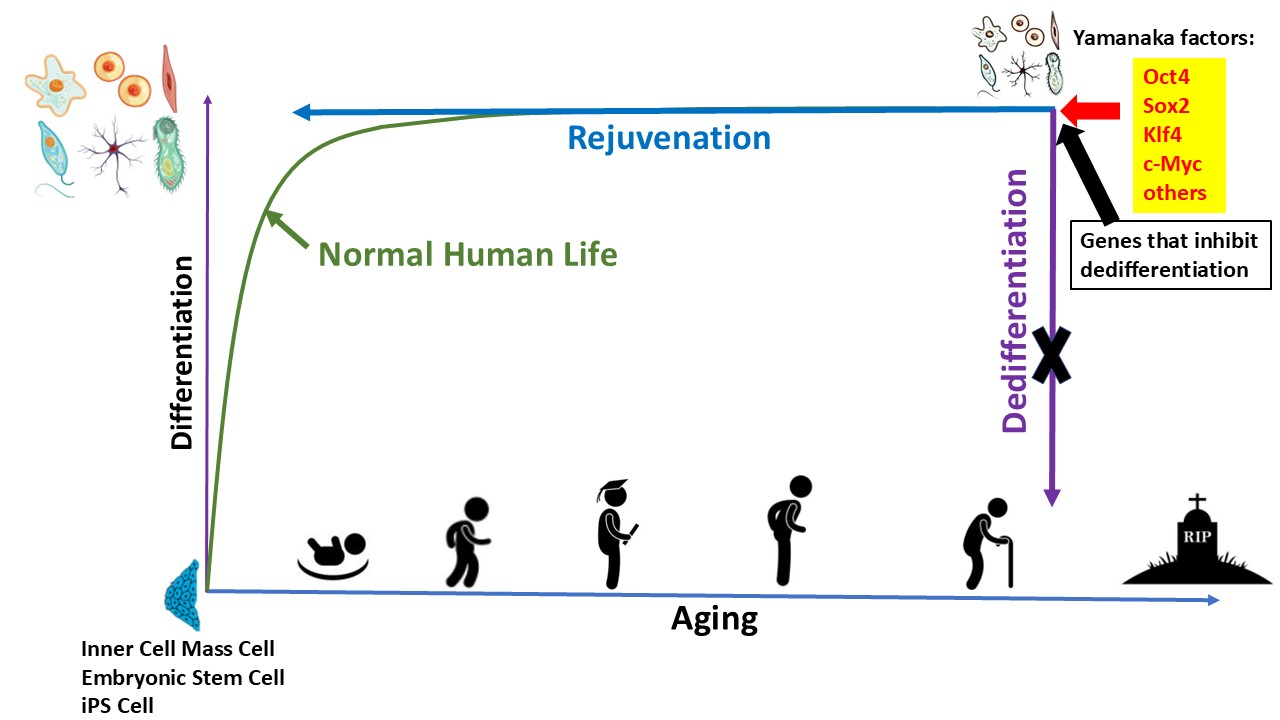
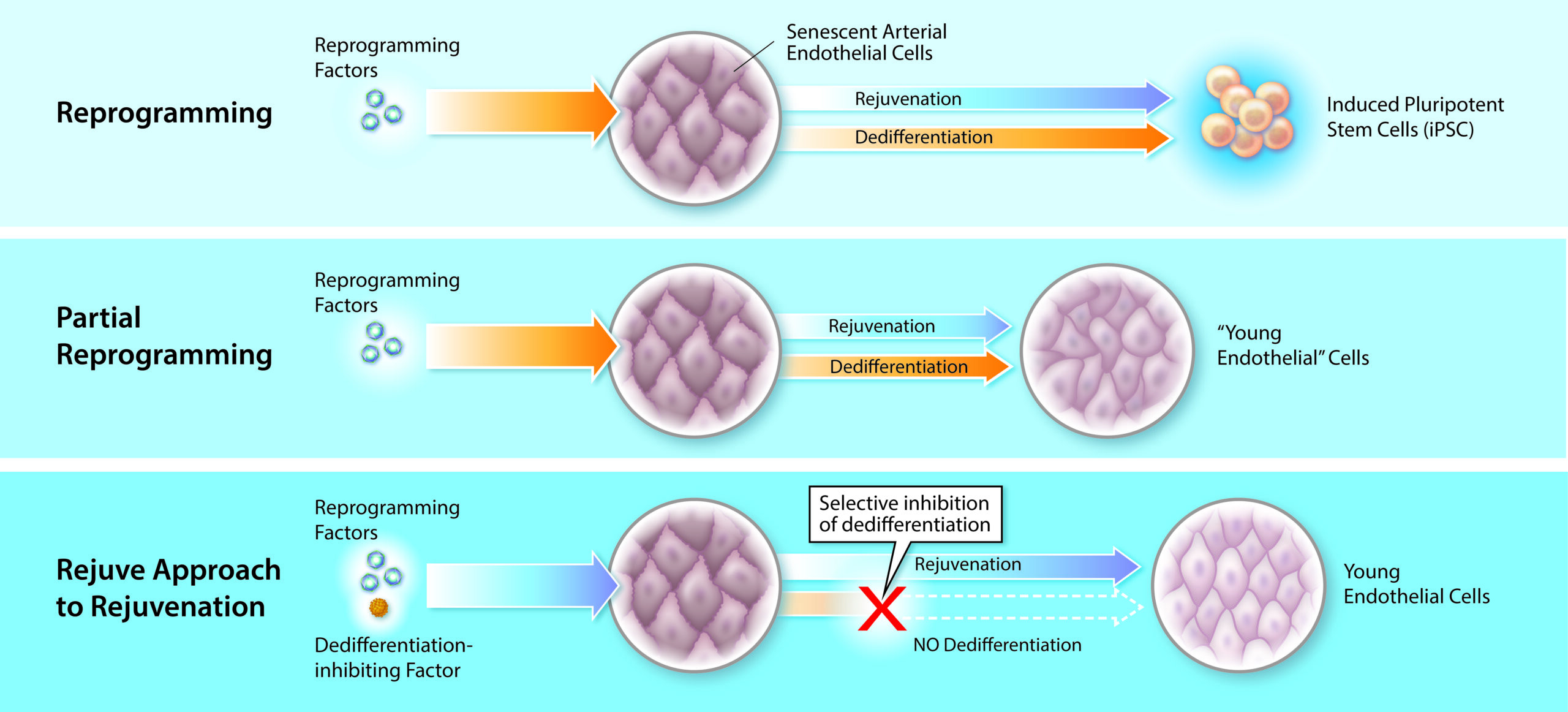
Rather than attempting to identify rejuvenation-inducing gene combinations de novo, we sought to deconstruct the reprogramming process itself. Specifically, we aimed to identify genetic perturbations that suppress dedifferentiation while allowing rejuvenation to proceed during reprogramming.
We first sought to identify genes associated primarily with cellular differentiation status. To this end, we analyzed publicly available transcriptomic datasets. Using advanced bioinformatics and data science methodologies, we identified genes exhibiting strong differential expression between young somatic cells and early embryonic or pluripotent cells. These genes fell into two principal categories:
Through this analysis, we prioritized 527 differentiation-related genes with strong expression bias toward either somatic or pluripotent states.
To isolate aging-specific components, we independently analyzed publicly available aging-related transcriptomic datasets, and prioritized 459 aging-associated genes.
As expected, substantial overlap was observed among genes associated with differentiation and aging. This overlap is biologically plausible, as senescent cells are typically terminally differentiated. Following integrative analysis and filtering, we finally prioritized approximately 200 candidate genes that were strongly associated with differentiation while showing minimal association with aging-related expression changes. These genes were prioritized for downstream functional screening.
To effectively identify novel rejuvenation methods, it is essential to first establish a reliable and high-throughput screening platform dedicated to evaluating cellular rejuvenation.
Aging is believed to commence as early as embryonic development (Gallardo et al., 2025), reflecting intrinsic biological programs that accompany cellular differentiation and tissue formation. Nevertheless, the pathophysiological manifestations of aging—such as functional decline and age-associated diseases—predominantly arise during adulthood. Accordingly, our rejuvenation research centers on adult cellular aging (cellular senescence).
Among the various methods for inducing cellular senescence, replicative senescence is the closest to natural cellular aging, as it occurs naturally in cells that divide over time, particularly in actively proliferating cells. This process closely mimics the gradual decline in cellular function observed during organismal aging, making it a suitable model for studying cellular aging (Ahn et al., 2025). Here we employ adult human arterial endothelial cells (HAECs) as an experimental model. There are two major reasons that we chose HAEC. One is HAECs from the same location in an artery are relatively homogeneous compared to other types of human primary cells. They have unique shapes in cell culture as well as unique surface markers, making it easier to identify and quantify. In addition, because of the relative homogeneousness, it would be easier to identify the minor shift on phenotype changes as well as genes expression profile changes. Another reason we chose HAECs is that endothelial cells are known to be one of the first cell types to become senescent with advancing age (Bloom et al., 2023; Grosse et al., 2020). In vivo, endothelial senescence occurs in multiple vascular beds including kidney (Cohen et al., 2021), retina (Shosha et al., 2018), liver (Grosse et al., 2020), brain (Kiss et al., 2020) and aorta (Yokoi et al., 2006), suggesting that endothelial senescence contributes to a variety of pathological processes associated with vascular dysfunction. Therefore, rejuvenating endothelial cells holds significant therapeutic potential for preventing and treating many major diseases associated with vascular dysfunction.
We have built a propriety rejuvenation screening platform using HAECs (US non-provisional patent pending, Application# 19/722,877) for the high throughput screening of rejuvenation gene cocktails. In this screening model, we use replicative aging human artery endothelial cells (HAEC) (non-growing) as starting cells and use their growth capability as the first parameter of rejuvenation, followed by identity verification and other parameters, as well as RNA sequencing analysis.
Starting the screen from cells that have completely exited the cell cycle is a deliberate design choice and is central to the stringency of the assay. Replicative senescence is a stable, actively enforced growth arrest: over the culture period used, untreated cells do not resume division. Restoring proliferative capacity to such cells is therefore a demanding functional endpoint that a weak intervention cannot produce. Many reported rejuvenation readouts are shifts in a transcriptional or epigenetic score measured in cells that are still dividing; our platform instead requires the hardest phenotype first — re-entry into the cell cycle from a fully arrested state — and only then evaluates identity and molecular markers. In effect the assay acts as a high-pass filter: interventions that produce only a marginal, score-level change are removed at the first gate, so that any cocktail which clears it represents a large-magnitude effect rather than a subtle shift.
Importantly, resumption of growth is treated as a necessary filter, not as proof of rejuvenation in itself. A cell that divides again has passed only the first of several tests; genuine rejuvenation is established only when the regrown cells also retain endothelial identity and show reversal of senescence-associated molecular features (Section 5.1.4). Growth is the gate; identity retention and molecular reversal are the evidence.
The growth-arrested starting state also normalizes the biological baseline across source material. Because each donor line is first driven to the same replicatively senescent, growth-arrested state before screening, the assay begins from a common, well-defined floor rather than from the variable baseline of differently aged primary cells. This standardizes the starting condition and narrows donor-to-donor variability in the screening window. It does not remove the need to confirm the method across multiple donors — that replication is described in Section 5.1.4 — but it means the screen is designed to measure the effect of the intervention itself rather than differences in donor starting age.
To functionally interrogate the role of our differentiation-related candidate genes, we incorporated them into the above-mentioned rejuvenation screening platform undergoing reprogramming. Specifically, during reprogramming treatment, we applied gene perturbations in two complementary modes:
By systematically applying these genes during reprogramming, we screened cells exhibited molecular and functional markers of rejuvenation while retaining endothelial cell identity.
Through the above approaches, we identified a set of genes whose perturbation selectively suppresses dedifferentiation without impairing rejuvenation during the reprogramming of senescent HAECs. Under these conditions, cells displayed high-magnitude rejuvenated molecular signatures while maintaining their native endothelial phenotype (Figure 1 – Figure 4).
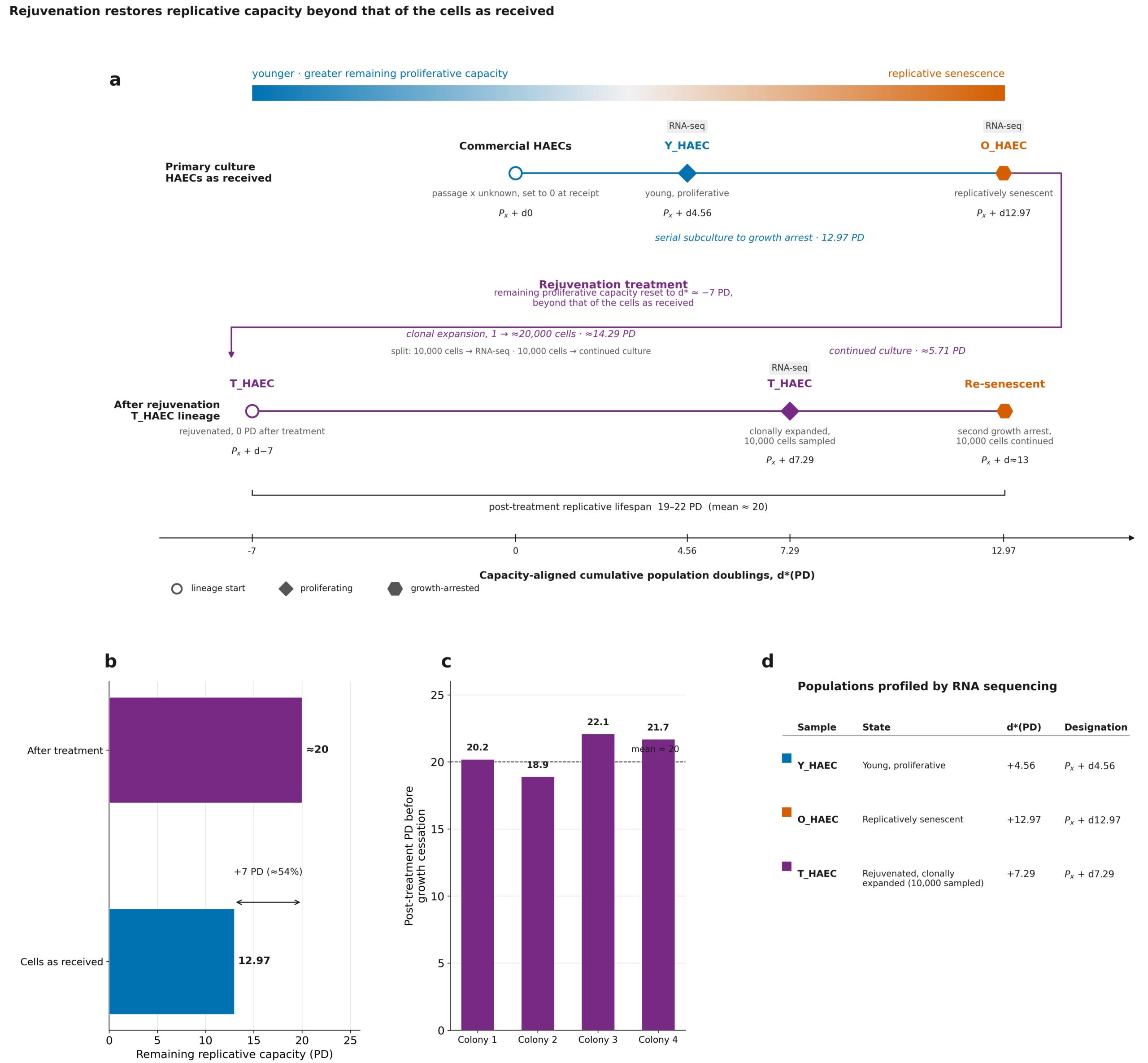
Figure 1. Rejuvenation restores replicative capacity beyond that of the cells as received. (a) Lineage schematic showing capacity-aligned cumulative population doublings (d*) from receipt of commercial HAECs through replicative senescence (O_HAEC), and the rejuvenation treatment that resets remaining proliferative capacity to d* ≈ −7, beyond that of the cells as received, followed by clonal expansion, sampling for RNA sequencing (T_HAEC), and continued culture to a second growth arrest (re-senescent). (b) Remaining replicative capacity before treatment (cells as received, 12.97 PD) versus after treatment (≈20 PD), an increase of ~7 PD (≈54%). (c) Post-treatment population doublings before growth cessation for four individual colonies from the same donor/experiment (not independent replicates), confirming reproducibility of the extended replicative capacity. (d) Populations profiled by RNA sequencing, with their capacity-aligned coordinates (d*) and designations; T_HAEC reflects the clonally expanded population split for sequencing versus continued culture. d* is a capacity-aligned coordinate (0 at receipt, ≈13 at growth arrest for both lineages); PD, population doublings; Px, passage at receipt. Data are representative of three independent experiments performed with cells from this donor.
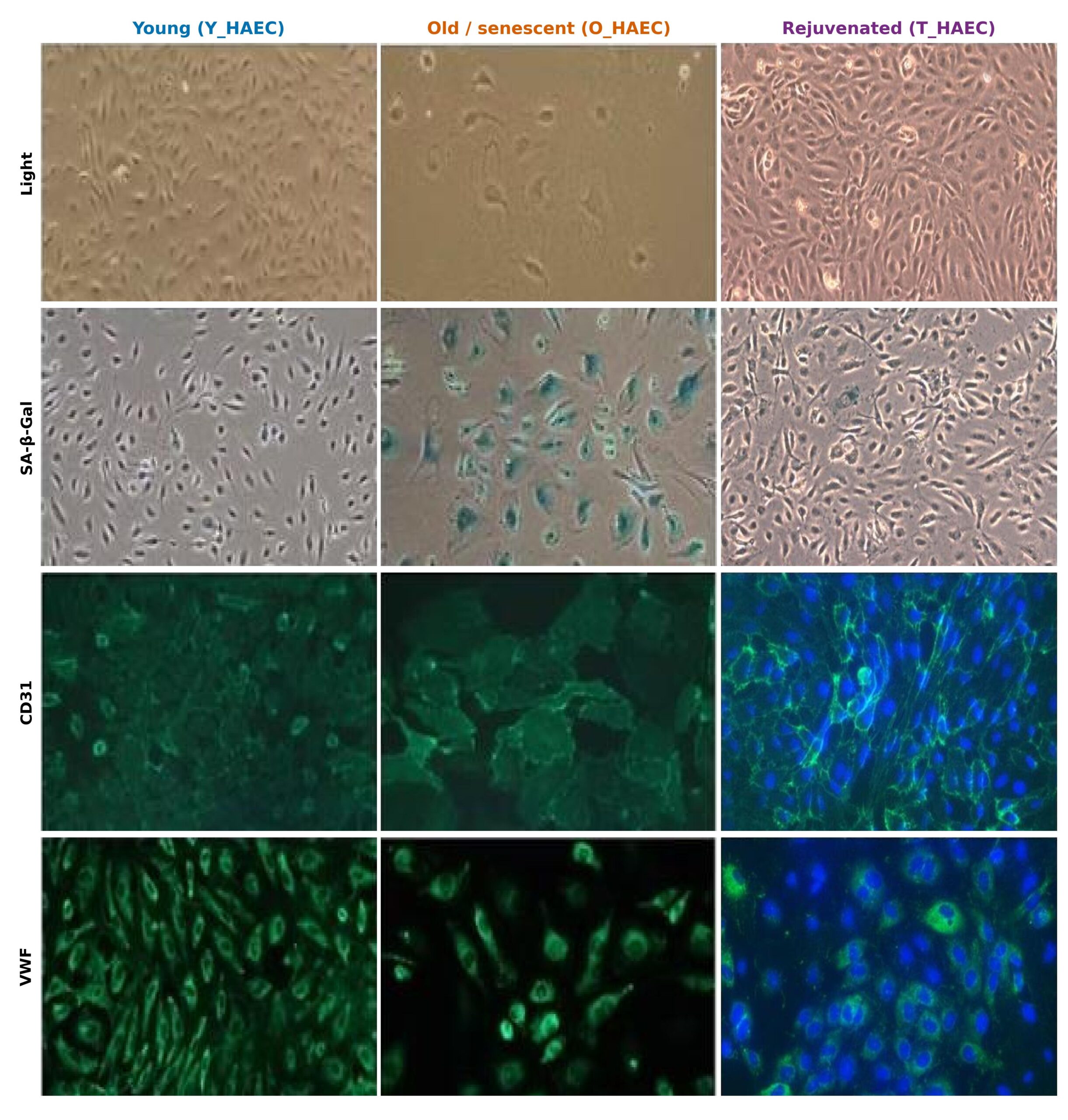
Figure 2. Treatment reverses selected senescence-associated changes while retaining endothelial identity markers. Morphology (light micrographs), senescence-associated β-galactosidase staining (SA-β-Gal), and endothelial identity markers (CD31, VWF) in young (Y_HAEC), replicatively senescent (O_HAEC), and rejuvenated (T_HAEC) human aortic endothelial cells (the same T_HAEC population as Figure 1). O_HAEC cells show enlarged, flattened morphology and diffuse SA-β-Gal positivity, consistent with senescence. T_HAEC cells recover a young-like morphology and are SA-β-Gal negative, while continuing to express CD31 and VWF, consistent with retained endothelial identity. Images are representative fields from a single experiment; no quantification across replicate wells or donors is presented..
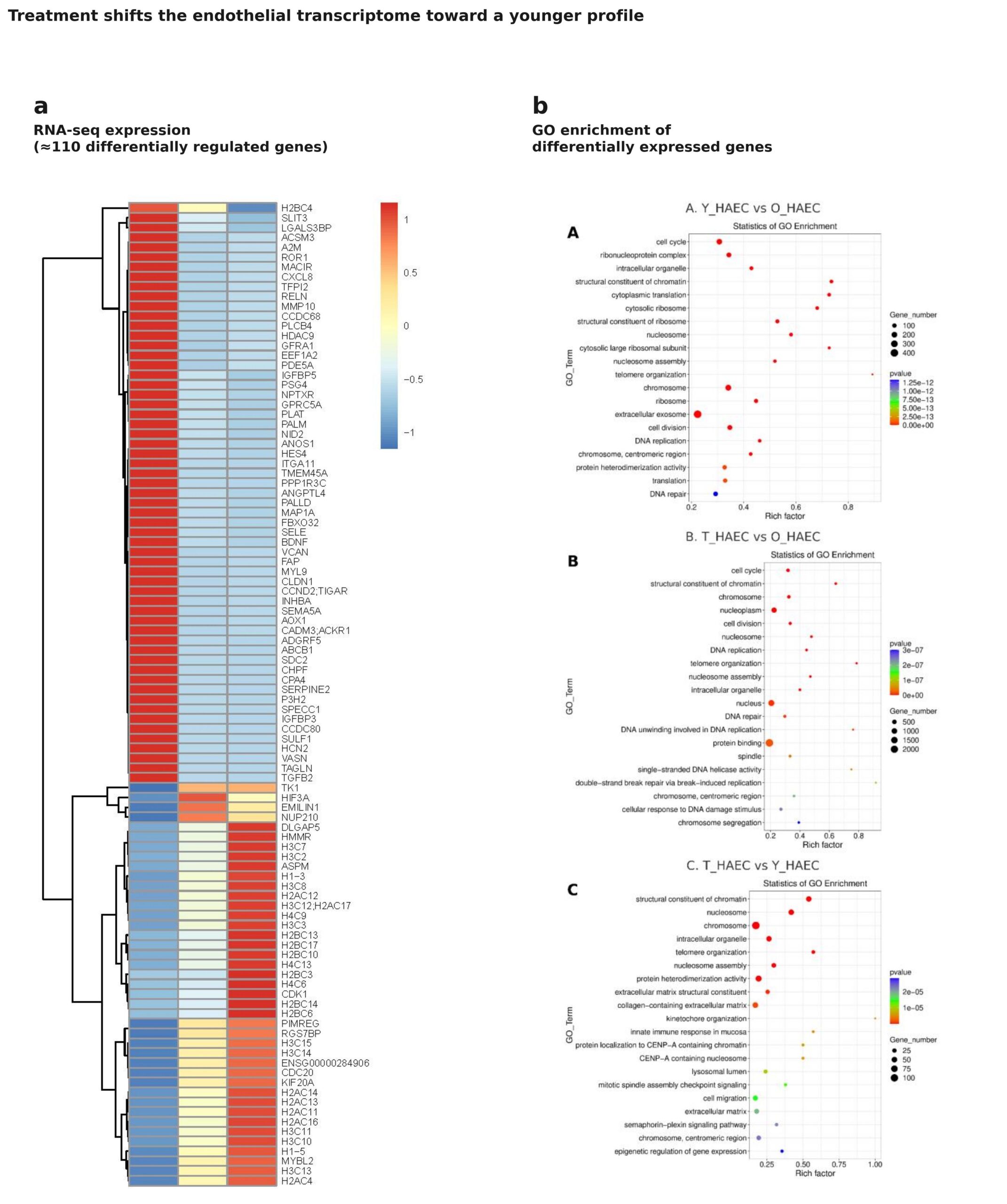
Figure 3. Treatment shifts the endothelial transcriptome toward a younger profile. (a) RNA-seq expression heatmap (z-scored) comparing old (O_HAEC), treated (T_HAEC), and young (Y_HAEC) HAECs across ≈110 genes prioritized for differential expression between groups. (b) Gene ontology (GO) enrichment among genes differing between groups, for young vs. old, treated vs. old, and treated vs. young. Old cells show elevated ECM/fibrosis, SASP/inflammatory, and pro-aging regulator genes, and reduced cell-cycle, chromatin, and histone genes; treatment reverses much of this pattern. Because treated cells are proliferating and old cells are growth-arrested, cell-cycle- and chromatin-related genes are expected to differ between a dividing and a non-dividing population independent of any rejuvenation-specific effect; treated cells remain transcriptionally distinct from young cells in ECM, migration, and immune-signaling terms.
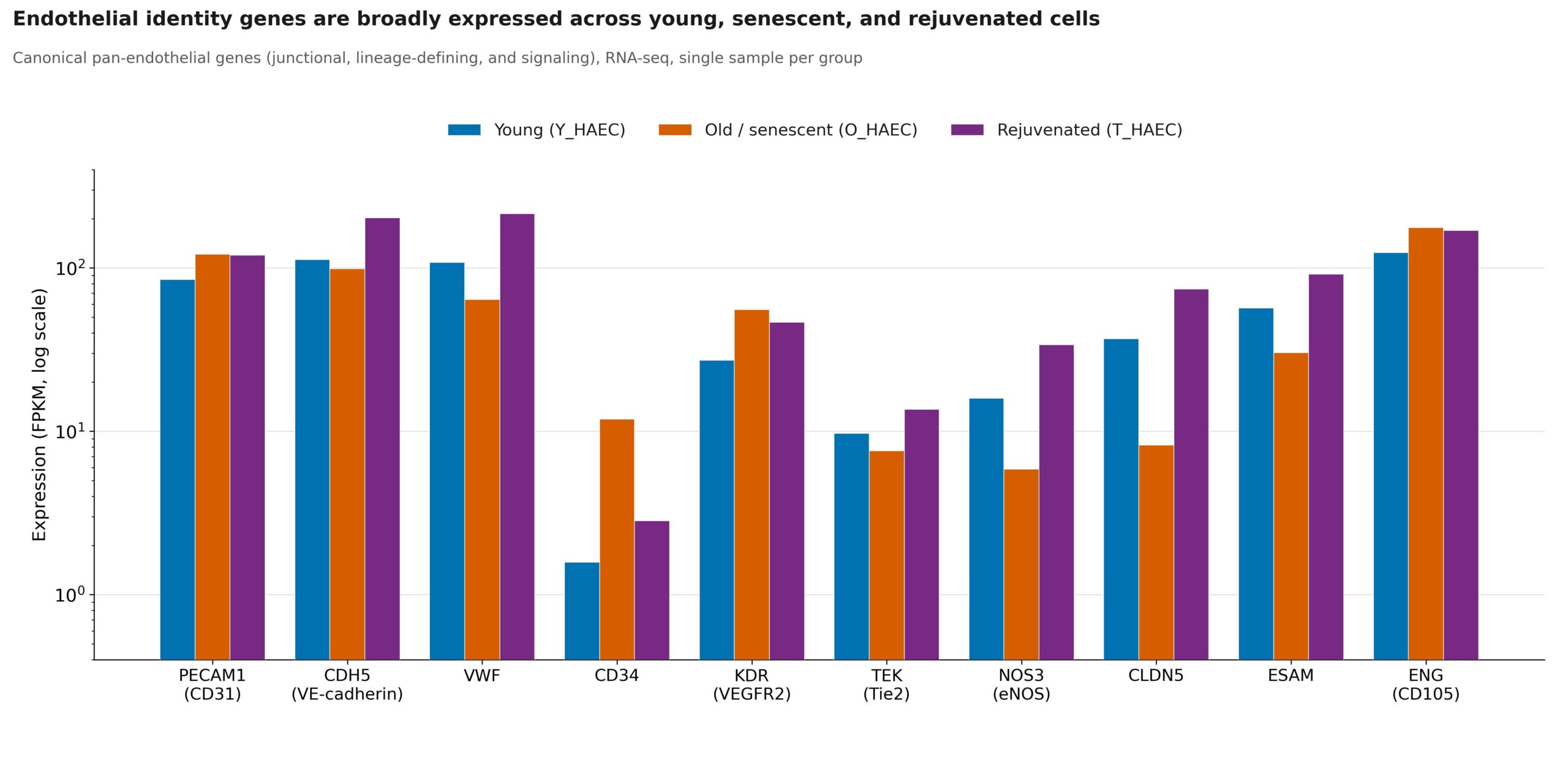
Figure 4. Endothelial identity genes are broadly expressed across young, senescent, and rejuvenated cells. Expression of ten canonical pan-endothelial genes (junctional, lineage-defining, and signaling) in young (Y_HAEC), old/senescent (O_HAEC), and rejuvenated (T_HAEC) HAECs, from RNA-seq (FPKM, log scale): PECAM1 (CD31), CDH5 (VE-cadherin), VWF, CD34, KDR (VEGFR2), TEK (Tie2), NOS3 (eNOS), CLDN5, ESAM, ENG (CD105). All ten genes are expressed at substantial levels (FPKM > 1, most > 10) in all three conditions, consistent with retained endothelial identity in both old and rejuvenated cells..
Using our proprietary rejuvenation screening platform (US non-provisional patent application #19/722,877), we tested whether replicatively senescent human aortic endothelial cells (HAECs) could be rejuvenated by selectively suppressing dedifferentiation during Yamanaka-factor reprogramming. Senescent HAECs (O_HAEC, 12.97 population doublings [PD] from an unknown starting passage to growth arrest) were treated with a six-gene cocktail — Five for reprogramming and one for dedifferentiation-inhibition — and compared against untreated young (Y_HAEC, 4.56 PD) and old (O_HAEC) cells from the same lineage (Figure 1a).
Proliferative capacity: Treated cells (T_HAEC) regained substantial replicative capacity: across four individual colonies, cells completed 19–22 additional population doublings (mean ≈20) before re-entering growth arrest — exceeding the 12.97 PD remaining in the cells as received by roughly 7 PD, or ≈54% (Figure 1b–c).
Identity and senescence phenotype: Rejuvenation was not accompanied by loss of endothelial identity or dedifferentiation. Treated cells recovered a young-like morphology and became SA-β-Gal–negative, while continuing to express the endothelial markers CD31 and VWF at levels comparable to young and old cells (Figure 2). RNA-seq confirmed retained expression of ten canonical pan-endothelial identity genes across all three groups (Figure 4), while a separate activation/inflammatory panel (ICAM1, VCAM1) showed lower expression in treated versus old cells. Treated cells also retained the capacity to form capillary-like networks in a tube-formation assay, confirming preserved angiogenic function, though barrier integrity and flow response were not tested (data not shown here).
Transcriptome: From one RNA-seq sample per group (Y_HAEC, O_HAEC, T_HAEC), differential expression and GO enrichment analysis identified ≈110 genes distinguishing the groups. Old cells showed elevated ECM/fibrosis, SASP/inflammatory, and pro-aging regulator genes alongside reduced cell-cycle, chromatin, and histone gene expression; treatment reversed much of this pattern (Figure 3). Because treated cells were actively dividing while old cells were growth-arrested, the cell-cycle and chromatin components of this signature are expected on proliferation status alone and are not, by themselves, evidence of rejuvenation. To address this confound, a second, targeted analysis excluding cell-cycle and replication-dependent histone genes still showed treated cells shifting toward young-cell levels for several SASP, secretory, nuclear-lamina, and endothelial-activation genes (CXCL8, CXCL1, CCL2, LMNB1, TFAM, SERPINE1, IGFBP7, GDF15, ICAM1, VCAM1), indicating a partial, proliferation-independent component to the reversal (data not shown here). This effect was not uniform — EDN1 rose above both comparators and IL6 did not shift toward young levels — and does not establish complete rejuvenation. Two independent quantitative checks support the same conclusion: a curated senescence/SASP gene panel places treated cells 62% of the way from old to young, and a panel-free, genome-wide correlation shows treated cells more similar to young cells (r = 0.949) than old cells are (r = 0.858) (data not shown here). This should be read alongside a sampling-position caveat: the T_HAEC RNA-seq sample was collected relatively later, in capacity-aligned terms, than the Y_HAEC sample, so where treated cells resemble young cells, the comparison is conservative rather than inflated.
Overall: In this study, suppressing dedifferentiation during reprogramming of senescent HAECs restored substantial replicative capacity and reversed several senescence-associated phenotypic and transcriptional changes — including a subset that is not attributable to the treated cells’ proliferation status — without loss of endothelial identity or function. The six-gene cocktail used here (five reprogramming factors plus one dedifferentiation inhibitor) is a proof of concept rather than a therapeutic candidate. The minimal-cocktail identification described in Milestone 2, is needed to establish generalizability and translational potential.
Rejuve begins with the rejuvenating potential of cellular reprogramming and asks whether its beneficial effects can be separated from the drive toward dedifferentiation. Our gene cocktails combine reprogramming factors with a component designed to restrain loss of endothelial identity. The goal is to achieve the greatest possible age reset while preserving the cell’s original lineage and specialized function. This differs from conventional time-limited reprogramming, which primarily controls how long cells are exposed to reprogramming factors, and from strategies centered on an individual rejuvenating gene.
This initial work provides experimental and molecular evidence that reprogramming factors together with a factor designed to limit dedifferentiation induces high-magnitude rejuvenation-associated changes while retaining endothelial identity markers after treatment (U.S. Non-Provisional Patent Application No. 19/722,877).
These findings also support the central hypothesis that rejuvenation and dedifferentiation are separable biological processes governed by partially independent regulatory networks, and effective rejuvenation strategies may be achieved by selectively reactivating components of an evolutionarily conserved rejuvenation program while actively constraining cell identity loss.
Most important, this initial result laid the foundation for our next Milestone.
Milestone 1 demonstrated that we can perform high-magnitude rejuvenation on senescent human endothelial cells while preserving cellular identity by strategically inhibiting dedifferentiation during reprogramming. However, Milestone 1 remains within the so-called “Yamanaka box,” meaning that it still relies on Yamanaka factor-based reprogramming as the foundation for cellular rejuvenation.
At this stage, the gene cocktail was intentionally broad and included all Yamanaka factors. The approach therefore depends on upstream regulators with wide-ranging chromatin and transcriptional effects. In total, six genes were used in the rejuvenation process — five for reprogramming and one for dedifferentiation inhibition — making the system too complex for practical therapeutic development.
More importantly, the current efficiency remains low, which limits its translational potential as a clinical product. Therefore, although the cocktail is effective as a proof of concept, it is not yet an actionable therapeutic product.
Milestone 2 marks a strategic shift from empirical factor combinations to precision regulatory engineering — moving Rejuve out of the “Yamanaka box”. Our objective is to identify the minimal set of downstream regulatory nodes that are necessary and sufficient to effectively restore youthful cellular function while keeping cells’ original identity. To achieve this, we are combining two core assets: (1) the Longitudinal Human Aging/Rejuvenation Gene Expression Atlas, which provides high-resolution, time-resolved transcriptional trajectories across aging, rejuvenation, differentiation, dedifferentiation, and reprogramming within a single human cell type; and (2) AI modeling built around what the Atlas uniquely provides: causal inference that uses its built-in genetic perturbations to identify true regulatory drivers rather than mere correlations, and a model that separates cellular identity from age so rejuvenation and identity preservation can be optimized together.
This integrated platform enables us to map the regulatory architecture underlying rejuvenation at systems scale, identify master control genes, and computationally screen simplified gene combinations before experimental validation. In doing so, Milestone 2 transforms our approach from broad reprogramming-based intervention to rational, mechanism-guided design of optimized rejuvenation gene cocktails with improved safety, specificity, and translational potential.
Although Although numerous public gene expression datasets on aging, differentiation, or reprogramming are available, their inherent variability—arising from differences in experimental design, biological sources, control selection, and data quality—has led to inconsistent and sometimes contradictory conclusions. Most importantly, there have been no time-resolved rejuvenation gene expression datasets available. This is primarily due to the absence of reliable experimental models capable of rejuvenating senescent human cells while preserving their original cellular identity.
Building upon the achievements of Milestone 1, we are now positioned to establish the Longitudinal Human Aging and Rejuvenation Gene Expression Atlas, a systematic and high-resolution experimental framework to capture the time-resolved gene expression dynamics across cellular aging, and, critically, rejuvenation under different gene perturbation conditions in senescent HAECs, as well as related differentiation, dedifferentiation, and reprogramming trajectories.
The Longitudinal Human Aging and Rejuvenation Gene Expression Atlas contain the following five core components with ScRNA-Seq analysis at daily intervals. The five components will be performed in two stages:
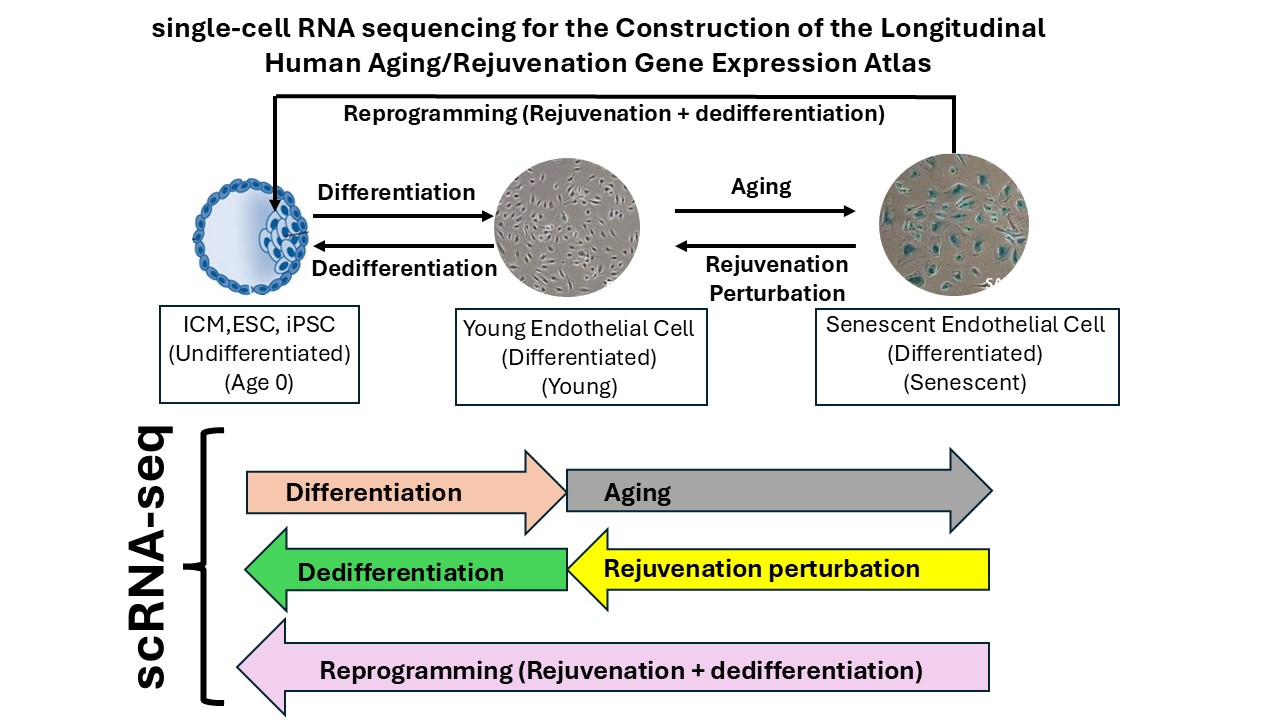
Critically, all datasets are derived from the same human cell type: endothelial cells. This single-cell-type design minimize cross-lineage variability and maximizes our ability to detect subtle, temporally resolved regulatory changes that would be obscured in heterogeneous datasets.
Moreover, all datasets include high-quality supervised labels, such as treatment conditions, cell-cycle and population doubling metadata, cell images, and defined cellular states. These rich annotations substantially increase the value of the atlas for downstream machine-learning applications, particularly for supervised and semi-supervised model fine-tuning.
This integrated atlas will represent the first complete, time-resolved Longitudinal Human Aging and Rejuvenation Gene Expression Atlas. It will serve as a unique, comprehensive resource that captures the regulatory dynamics underlying human cellular aging and rejuvenation. The atlas will also form the foundation for later phases of our AI-driven approaches.
Using AI and bioinformatics to analyze the Longitudinal Human Aging/Rejuvenation Gene Expression Atlas, we will identify gene expression signatures corresponding to each day of continuous HAEC culture as cells progress toward replicative senescence — drawing on the Atlas’s natural-aging arm to build a reference signature for every successive stage of cellular senescence. These reference signatures will then be compared against gene expression profiles from human tissue samples of different ages to estimate the proportion of cells occupying each senescence stage within a given tissue.
Because senescent cells accumulate in tissues as humans age, large-scale comparison of these reference signatures against age-stratified human samples is expected to yield a highly precise biological Aging Clock — a quantitative measure of biological, rather than chronological, age. The Aging Clock will serve two purposes: as a tissue-level readout of rejuvenation efficacy during our later in vivo screening work (Milestone 3), and as the analytical foundation for a future standalone diagnostic product.
A time-resolved, multi-perturbation atlas is only as valuable as the causal-inference framework applied to it: raw co-expression signal alone cannot distinguish a gene that drives rejuvenation from one that merely rises and falls alongside it. We have therefore built a four-phase causal AI framework that moves from raw sequencing data to a minimal, safety-validated gene cocktail, with each phase gated by an explicit, falsifiable checkpoint before the next phase is allowed to build on it:
Rejuvenation, replicative senescence, reprogramming, differentiation, and dedifferentiation almost certainly proceed at different intrinsic rates. “Day 4” of the rejuvenation arm and “Day 4” of the reprogramming arm are not necessarily the same underlying biological stage — one process may simply run faster or slower than another. Before any cross-experiment causal analysis is possible, the five arms of the Atlas must first be placed onto a single, shared biological timeline.
We address this with optimal transport, a mathematical framework for finding the most consistent correspondence between snapshots of a population taken at different times — conceptually similar to aligning frames from several videos filmed at different speeds. GRIT (Lamoline et al., 2025), a published optimal-transport method built for exactly this class of problem, additionally provides a theoretical guarantee that as few as three sampled timepoints are sufficient to recover the underlying trajectory. That is reassuring relative to our daily sampling density, but it will still be verified empirically on our own data rather than assumed.
Checkpoint: the shared timeline is accepted as the common clock for Phase 1 only if it correctly and consistently places known biological landmarks — onset of growth arrest, commitment to pluripotency during reprogramming, and attainment of mature endothelial identity during differentiation — at the same relative position across all five trajectories simultaneously. A timeline that cannot recover these known landmarks is not trusted as the basis for downstream causal inference.
Conventional co-expression network inference (e.g., GRNBoost2/pySCENIC) identifies genes that move together, not genes that cause one another to move — two genes can be tightly co-regulated because a third, unobserved gene drives both, with neither being causal for the other. What differentiates the Atlas is that it contains genuine experimental interventions — multiple, independent dedifferentiation-blocking treatments together with natural replicative senescence, all performed within the same cell lineage — which lets us move from “moves with” to “causes.”
Each treatment functions as an instrumental variable: it is applied independently of other influences on the cell, it acts directly on one target gene, and any effect it has on other genes should occur only through that target gene, not through an independent side channel. Using treatments as instruments in this way lets us estimate genuine causal effect sizes rather than correlational strength, and separate direct drivers from downstream passengers. We apply ADAPRE (Sun et al., 2026), a method published in 2026 and designed specifically for this class of instrumented, longitudinal single-cell data. ADAPRE additionally corrects a technical confound relevant to our data: genes subject to more efficient perturbation (a stronger knockdown or stronger overexpression) can spuriously appear as more influential network hubs, purely as an artifact of perturbation efficiency rather than true biological importance.
A gene earns the designation “core regulator” only if its causal role is consistent across multiple independent treatments, rather than being an artifact of any single experiment. As an independent reliability check, we will benchmark our pipeline against “When Does Gene Regulatory Network Inference Break?,” a published study that systematically characterizes failure modes of gene-regulatory-network methods on single-cell data.
Output: a ranked list of candidate driver genes, ordered by estimated causal contribution to rejuvenation — not by network connectivity or co-expression strength.
Filtering candidate regulators for identity preservation cannot be a filter bolted on after gene selection; it must be built as its own dedicated model. The Stage Two arms of the Atlas — ESC-to-endothelial differentiation, endothelial-to-iPSC dedifferentiation, and full reprogramming — provide exactly the labeled contrast needed: real, known examples of a stem-cell-like transcriptional state versus a mature endothelial-cell state, so this distinction does not need to be inferred de novo.
We use these labeled trajectories to train a disentangled representation-learning model that separates two axes normally conflated in bulk transcriptional readouts: what cell type a cell is, and how old or senescent that cell is. Conceptually, this yields two independent readouts from the same expression profile — one axis for cell identity, one for cellular age/senescence — rather than a single, conflated readout. Any cell, real or in silico, can then be scored independently on each axis, converting a qualitative goal (“avoid pushing cells back toward a stem-cell state”) into a quantitative, trackable, and optimizable metric.
Output: an identity-drift scoring function, calibrated against our own Stage Two data, that quantifies how far any candidate cell state has moved from proper endothelial identity. This score is the guardrail metric carried into Phase 3.
A ranked list of individually important genes is not the same as a working combination. Our Milestone 1 six-gene cocktail works through gene–gene interaction effects — co-regulated up- and down-modulation across multiple genes at once — which a single-gene importance ranking cannot, by construction, detect. The Phase 1 output is therefore treated as a candidate shortlist for combinatorial search, not a final answer.
We combine the Phase 1 causal regulator model and the Phase 2 identity model into a single in silico simulator. For any candidate gene combination — including combinations never tested experimentally — the simulator jointly estimates (i) predicted rejuvenation magnitude and (ii) predicted identity-drift risk. We search for combinations that perform well on both objectives simultaneously (Pareto optimization) rather than collapsing the two into a single, arbitrarily weighted score. Exhaustive search is computationally impossible: as established earlier, there are approximately 8.88 × 10²² possible 2-to-6-gene combinations drawn from roughly 20,000 candidate genes. We instead use Bayesian optimization / active learning (Di Fiore et al., 2024) to select the next most informative combination to evaluate, update the model on the result, and repeat — rather than exhaustive or random search.
This search is closed-loop with our existing HAEC screening platform, established under Milestone 1: the simulator proposes the next combination most worth testing, the wet-lab platform tests it, and the resulting data is fed back to update the simulator, with the cycle repeating continuously rather than as a single one-time handoff from computation to bench.
Before any cocktail is designated “minimal,” every gene in the final combination must pass a leave-one-out ablation test — sequential single-gene removal, first in silico across the full candidate set, then physically in the lab for the top candidates — to confirm that each remaining gene is individually necessary. “Small” and “truly minimal” are distinct claims, and only gene-by-gene ablation substantiates the latter.
Experimental Validation Through the Rejuvenation Screening Platform Phase 3 (Section 5.2.3.4) already includes laboratory testing: the closed loop tests candidate cocktails iteratively, and the top-ranked cocktails are further tested by removing one gene at a time, to confirm that every gene in each cocktail is needed. Once the search converges on a selected minimal cocktail, that cocktail as a whole undergoes a final, confirmatory validation on our proprietary high-throughput Endothelial Cell Rejuvenation Screening Platform, established under Milestone 1 — confirming its rejuvenation efficacy, mechanistic relevance, and safety as the gating checkpoint before advancing to Milestone 3.
Upon successful preclinical validation, the optimized rejuvenation gene cocktails will advance toward early-stage clinical evaluation. The primary objectives will be to assess safety, therapeutic activity, delivery feasibility, and disease-relevant efficacy in age-related conditions.
The initial clinical translation strategy will focus on two major directions:
Critical Limb Ischemia / No-Option Peripheral Artery Disease
Diabetic Foot Ulcer / Non-Healing Chronic Wounds
Dry Age-Related Macular Degeneration / Geographic Atrophy
If the gene cocktails demonstrate reproducible rejuvenation effects across multiple cell types in vitro, we will expand evaluation beyond ischemic disease models to aging animal models. These studies will assess their potential to improve tissue function, mitigate age-related pathologies, and extend healthspan.
Results from these programs will guide the selection of therapeutic indications beyond vascular disease, considering preclinical efficacy, delivery feasibility, safety, regulatory requirements, and commercial opportunity. Systemic rejuvenation and potential lifespan extension will remain longer-term objectives, pursued as the supporting evidence and delivery capabilities develop.
In parallel with this broader preclinical evaluation, we will initiate a targeted small-molecule discovery program to identify compounds that reproduce the key rejuvenation effects of the gene cocktails. Candidate compounds will undergo staged in vitro and in vivo testing to evaluate efficacy and reproducibility and characterize their safety and pharmacological profiles.
Acosta-Rodríguez, V., Rijo-Ferreira, F., Izumo, M., Xu, P., Wight-Carter, M., Green, C. B., & Takahashi, J. S. (2022). Circadian alignment of early onset caloric restriction promotes longevity in male C57BL/6J mice. Science, 376(6598), 1192–1202.
Ahn, M., Kim, J., & Seo, J. H. (2025). Single-cell RNA-seq analysis reveals the multi-step process of cellular senescence. Biochemistry and Biophysics Reports, 42, 102042.
Amaral, P., Carbonell-Sala, S., De La Vega, F. M., Faial, T., Frankish, A., Gingeras, T., Guigo, R., Harrow, J. L., Hatzigeorgiou, A. G., & Johnson, R. (2023). The status of the human gene catalogue. Nature, 622(7981), 41–47.
Amorim, J. A., Coppotelli, G., Rolo, A. P., Palmeira, C. M., Ross, J. M., & Sinclair, D. A. (2022). Mitochondrial and metabolic dysfunction in ageing and age-related diseases. Nature Reviews Endocrinology, 18(4), 243–258.
Baechle, J. J., Chen, N., Makhijani, P., Winer, S., Furman, D., & Winer, D. A. (2023). Chronic inflammation and the hallmarks of aging. Molecular Metabolism, 74, 101755.
Baker, D. J., Childs, B. G., Durik, M., Wijers, M. E., Sieben, C. J., Zhong, J., A. Saltness, R., Jeganathan, K. B., Verzosa, G. C., & Pezeshki, A. (2016). Naturally occurring p16Ink4a-positive cells shorten healthy lifespan. Nature, 530(7589), 184–189.
Bárcena, C., Valdés-Mas, R., Mayoral, P., Garabaya, C., Durand, S., Rodríguez, F., Fernández-García, M. T., Salazar, N., Nogacka, A. M., & Garatachea, N. (2019). Healthspan and lifespan extension by fecal microbiota transplantation into progeroid mice. Nature Medicine, 25(8), 1234–1242.
Blackburn, E. H., Epel, E. S., & Lin, J. (2015). Human telomere biology: A contributory and interactive factor in aging, disease risks, and protection. Science, 350(6265), 1193–1198.
Bloom, S. I., Islam, M. T., Lesniewski, L. A., & Donato, A. J. (2023). Mechanisms and consequences of endothelial cell senescence. Nature Reviews Cardiology, 20(1), 38–51.
Bobkova, N. V., Evgen’ev, M., Garbuz, D. G., Kulikov, A. M., Morozov, A., Samokhin, A., Velmeshev, D., Medvinskaya, N., Nesterova, I., & Pollock, A. (2015). Exogenous Hsp70 delays senescence and improves cognitive function in aging mice. Proceedings of the National Academy of Sciences, 112(52), 16006–16011.
Boehme, M., Guzzetta, K. E., Bastiaanssen, T. F. S., van de Wouw, M., Moloney, G. M., Gual-Grau, A., Spichak, S., Olavarría-Ramírez, L., Fitzgerald, P., Morillas, E., Ritz, N. L., Jaggar, M., Cowan, C. S. M., Crispie, F., Donoso, F., Halitzki, E., Neto, M. C., Sichetti, M., Golubeva, A. V., … Cryan, J. F. (2021). Microbiota from young mice counteracts selective age-associated behavioral deficits. Nature Aging, 1(8), 666–676. https://doi.org/10.1038/s43587-021-00093-9
Browder, K. C., Reddy, P., Yamamoto, M., Haghani, A., Guillen, I. G., Sahu, S., Wang, C., Luque, Y., Prieto, J., & Shi, L. (2022). In vivo partial reprogramming alters age-associated molecular changes during physiological aging in mice. Nature Aging, 2(3), 243–253.
Campbell, K. H., McWhir, J., Ritchie, W. A., & Wilmut, I. (1996). Sheep cloned by nuclear transfer from a cultured cell line. Nature, 380(6569), 64–66.
Castoldi, F., Humeau, J., Martins, I., Lachkar, S., Loew, D., Dingli, F., Durand, S., Enot, D., Bossut, N., & Chery, A. (2020). Autophagy-mediated metabolic effects of aspirin. Cell Death Discovery, 6(1), 129.
Cohen, C., Le Goff, O., Soysouvanh, F., Vasseur, F., Tanou, M., Nguyen, C., Amrouche, L., Le Guen, J., Saltel‐Fulero, O., & Meunier, T. (2021). Glomerular endothelial cell senescence drives age‐related kidney disease through PAI‐1. EMBO Molecular Medicine, 13(11), e14146.
de Lima Camillo, L. P., Gam, R., Maskalenka, K., LeBlanc, F. J., Urrutia, G. A., Mejia, G. M., Miller, H. E., Wardlaw, C. P., Pickles, A., & Everton, L. (2025). A single factor for safer cellular rejuvenation. bioRxiv, 2025–06.
Demidenko, O., Barardo, D., Budovskii, V., Finnemore, R., Palmer III, F. R., Kennedy, B. K., & Budovskaya, Y. V. (2021). Rejuvant®, a potential life-extending compound formulation with alpha-ketoglutarate and vitamins, conferred an average 8 year reduction in biological aging, after an average of 7 months of use, in the TruAge DNA methylation test. Aging (Albany NY), 13(22), 24485.
Di Fiore, F., Nardelli, M., & Mainini, L. (2024). Active Learning and Bayesian Optimization: A Unified Perspective to Learn with a Goal: F. Di Fiore et al. Archives of Computational Methods in Engineering, 31(5), 2985–3013.
Di Micco, R., Krizhanovsky, V., Baker, D., & d’Adda di Fagagna, F. (2021). Cellular senescence in ageing: From mechanisms to therapeutic opportunities. Nature Reviews Molecular Cell Biology, 22(2), 75–95.
Duran‐Ortiz, S., List, E. O., Ikeno, Y., Young, J., Basu, R., Bell, S., McHugh, T., Funk, K., Mathes, S., & Qian, Y. (2021). Growth hormone receptor gene disruption in mature‐adult mice improves male insulin sensitivity and extends female lifespan. Aging Cell, 20(12), e13506.
Eom, H.-J., Jo, B.-K., Kim, J., & Cha, H.-J. (2026). Oxidative stress drives liver failure during in vivo partial reprogramming. Molecules and Cells, 100378.
Franceschi, C., Garagnani, P., Parini, P., Giuliani, C., & Santoro, A. (2018). Inflammaging: A new immune–metabolic viewpoint for age-related diseases. Nature Reviews Endocrinology, 14(10), 576–590.
Gallardo, A., Belmonte-Reche, E., Marti-Marimon, M., Domingo-Reinés, J., Peris, G., López-Onieva, L., Fernández-Rengel, I., Xie, J., Tristán-Ramos, P., & Bellora, N. (2025). BMAL1-TRIM28 represses transposable elements independently of CLOCK in pluripotent cells. Nature Communications, 16(1), 8250.
Gilbert, S. (2000). Aging: The Biology of Senescence (6th edition.). Sunderland (MA): Sinauer Associates. https://www.ncbi.nlm.nih.gov/books/NBK10041/
Gill, D., Parry, A., Santos, F., Okkenhaug, H., Todd, C. D., Hernando-Herraez, I., Stubbs, T. M., Milagre, I., & Reik, W. (2022). Multi-omic rejuvenation of human cells by maturation phase transient reprogramming. Elife, 11, e71624.
Goedeke, L., Murt, K. N., Di Francesco, A., Camporez, J. P., Nasiri, A. R., Wang, Y., Zhang, X., Cline, G. W., de Cabo, R., & Shulman, G. I. (2022). Sex‐and strain‐specific effects of mitochondrial uncoupling on age‐related metabolic diseases in high‐fat diet‐fed mice. Aging Cell, 21(2), e13539.
Grosse, L., Wagner, N., Emelyanov, A., Molina, C., Lacas-Gervais, S., Wagner, K.-D., & Bulavin, D. V. (2020). Defined p16High senescent cell types are indispensable for mouse healthspan. Cell Metabolism, 32(1), 87–99.
Gurdon, J. B. (1962). Adult frogs derived from the nuclei of single somatic cells. Developmental Biology, 4(2), 256–273.
Hafycz, J. M., Strus, E., & Naidoo, N. (2022). Reducing ER stress with chaperone therapy reverses sleep fragmentation and cognitive decline in aged mice. Aging Cell, 21(6), e13598.
Hipp, M. S., Kasturi, P., & Hartl, F. U. (2019). The proteostasis network and its decline in ageing. Nature Reviews Molecular Cell Biology, 20(7), 421–435.
Jaskelioff, M., Muller, F. L., Paik, J.-H., Thomas, E., Jiang, S., Adams, A. C., Sahin, E., Kost-Alimova, M., Protopopov, A., & Cadinanos, J. (2011). Telomerase reactivation reverses tissue degeneration in aged telomerase-deficient mice. Nature, 469(7328), 102–106.
Kane, A. E., & Sinclair, D. A. (2019). Epigenetic changes during aging and their reprogramming potential. Critical Reviews in Biochemistry and Molecular Biology, 54(1), 61–83.
Kerepesi, C., Zhang, B., Lee, S.-G., Trapp, A., & Gladyshev, V. N. (2021). Epigenetic clocks reveal a rejuvenation event during embryogenesis followed by aging. Science Advances, 7(26), eabg6082.
Kiss, T., Nyúl-Tóth, Á., Balasubramanian, P., Tarantini, S., Ahire, C., DelFavero, J., Yabluchanskiy, A., Csipo, T., Farkas, E., & Wiley, G. (2020). Single-cell RNA sequencing identifies senescent cerebromicrovascular endothelial cells in the aged mouse brain. Geroscience, 42(2), 429–444.
Lamoline, F., Haasler, I., Karlsson, J., Gonçalves, J., & Aalto, A. (2025). Dynamic gene regulatory network inference from single-cell data using optimal transport. Bioinformatics, 41(8), btaf394.
Levine, B., & Kroemer, G. (2019). Biological functions of autophagy genes: A disease perspective. Cell, 176(1), 11–42.
Liu, S. V. (2008). iPS cells: A more critical review. Stem Cells and Development, 17(3), 391–398.
López-Otín, C., Blasco, M. A., Partridge, L., Serrano, M., & Kroemer, G. (2023). Hallmarks of aging: An expanding universe. Cell, 186(2), 243–278.
Ma, S., Wang, S., Ye, Y., Ren, J., Chen, R., Li, W., Li, J., Zhao, L., Zhao, Q., & Sun, G. (2022). Heterochronic parabiosis induces stem cell revitalization and systemic rejuvenation across aged tissues. Cell Stem Cell, 29(6), 990–1005.
Maharajan, N., Vijayakumar, K., Jang, C. H., & Cho, G.-W. (2020). Caloric restriction maintains stem cells through niche and regulates stem cell aging. Journal of Molecular Medicine, 98(1), 25–37. https://doi.org/10.1007/s00109-019-01846-1
Mehdipour, M., Skinner, C., Wong, N., Lieb, M., Liu, C., Etienne, J., Kato, C., Kiprov, D., Conboy, M. J., & Conboy, I. M. (2020). Rejuvenation of three germ layers tissues by exchanging old blood plasma with saline-albumin. Aging (Albany NY), 12(10), 8790.
Miller, K. N., Victorelli, S. G., Salmonowicz, H., Dasgupta, N., Liu, T., Passos, J. F., & Adams, P. D. (2021). Cytoplasmic DNA: sources, sensing, and role in aging and disease. Cell, 184(22), 5506–5526.
Minhas, P. S., Latif-Hernandez, A., McReynolds, M. R., Durairaj, A. S., Wang, Q., Rubin, A., Joshi, A. U., He, J. Q., Gauba, E., & Liu, L. (2021). Restoring metabolism of myeloid cells reverses cognitive decline in ageing. Nature, 590(7844), 122–128.
Nieto-Torres, J. L., & Hansen, M. (2021). Macroautophagy and aging: The impact of cellular recycling on health and longevity. Molecular Aspects of Medicine, 82, 101020.
North, B. J., Rosenberg, M. A., Jeganathan, K. B., Hafner, A. V., Michan, S., Dai, J., Baker, D. J., Cen, Y., Wu, L. E., & Sauve, A. A. (2014). SIRT 2 induces the checkpoint kinase BubR1 to increase lifespan. The EMBO Journal, 33(13), 1438–1453.
Ocampo, A., Reddy, P., Martinez-Redondo, P., Platero-Luengo, A., Hatanaka, F., Hishida, T., Li, M., Lam, D., Kurita, M., & Beyret, E. (2016). In vivo amelioration of age-associated hallmarks by partial reprogramming. Cell, 167(7), 1719–1733.
Olova, N., Simpson, D. J., Marioni, R. E., & Chandra, T. (2019). Partial reprogramming induces a steady decline in epigenetic age before loss of somatic identity. Aging Cell, 18(1), e12877.
Pálovics, R., Keller, A., Schaum, N., Tan, W., Fehlmann, T., Borja, M., Kern, F., Bonanno, L., Calcuttawala, K., & Webber, J. (2022). Molecular hallmarks of heterochronic parabiosis at single-cell resolution. Nature, 603(7900), 309–314.
Pyo, J.-O., Yoo, S.-M., Ahn, H.-H., Nah, J., Hong, S.-H., Kam, T.-I., Jung, S., & Jung, Y.-K. (2013). Overexpression of Atg5 in mice activates autophagy and extends lifespan. Nature Communications, 4(1), 2300.
Ragonnaud, E., & Biragyn, A. (2021). Gut microbiota as the key controllers of “healthy” aging of elderly people. Immunity & Ageing, 18(1), 2. https://doi.org/10.1186/s12979-020-00213-w
Ruzankina, Y., & Brown, E. (2007). Relationships between stem cell exhaustion, tumour suppression and ageing. British Journal of Cancer, 97(9), 1189–1193.
Sciorati, C., Gamberale, R., Monno, A., Citterio, L., Lanzani, C., De Lorenzo, R., Ramirez, G. A., Esposito, A., Manunta, P., & Manfredi, A. A. (2020). Pharmacological blockade of TNFα prevents sarcopenia and prolongs survival in aging mice. Aging (Albany NY), 12(23), 23497.
Sengstack, J., Zheng, J., Aghayev, T., Bieri, G., Mobaraki, M., Lin, J., Deng, C., Villeda, S. A., & Li, H. (2026). Systematic identification of single transcription factor perturbations that drive cellular and tissue rejuvenation. Proceedings of the National Academy of Sciences, 123(2), e2515183123.
Shosha, E., Xu, Z., Narayanan, S. P., Lemtalsi, T., Fouda, A. Y., Rojas, M., Xing, J., Fulton, D., Caldwell, R. W., & Caldwell, R. B. (2018). Mechanisms of diabetes-induced endothelial cell senescence: Role of arginase 1. International Journal of Molecular Sciences, 19(4), 1215.
Sun, Z., Kang, H., & Keleş, S. (2026). Causal gene regulatory network inference from Perturb-seq via adaptive instrumental variable modeling. bioRxiv, 2026–02.
Takahashi, K., & Yamanaka, S. (2006). Induction of pluripotent stem cells from mouse embryonic and adult fibroblast cultures by defined factors. Cell, 126(4), 663–676.
Tavallaie, M., Voshtani, R., Deng, X., Qiao, Y., Jiang, F., Collman, J. P., & Fu, L. (2020). Moderation of mitochondrial respiration mitigates metabolic syndrome of aging. Proceedings of the National Academy of Sciences, 117(18), 9840–9850.
Tian, X., Firsanov, D., Zhang, Z., Cheng, Y., Luo, L., Tombline, G., Tan, R., Simon, M., Henderson, S., & Steffan, J. (2019). SIRT6 is responsible for more efficient DNA double-strand break repair in long-lived species. Cell, 177(3), 622–638.
Tomas-Loba, A., Flores, I., Fernandez-Marcos, P. J., Cayuela, M. L., Maraver, A., Tejera, A., Borras, C., Matheu, A., Klatt, P., & Flores, J. M. (2008). Telomerase reverse transcriptase delays aging in cancer-resistant mice. Cell, 135(4), 609–622.
Vijg, J., & Suh, Y. (2013). Genome instability and aging. Annual Review of Physiology, 75(1), 645–668.
Wang, T., Li, Y., Zhu, Y., Liu, Z., Huang, L., Zhao, H., Zhou, Z., & Wu, Q. (2023). Anti-aging mechanism of different age donor-matched adipose-derived stem cells. Stem Cell Research & Therapy, 14(1), 192. https://doi.org/10.1186/s13287-023-03415-3
Wang, W., Zheng, Y., Sun, S., Li, W., Song, M., Ji, Q., Wu, Z., Liu, Z., Fan, Y., & Liu, F. (2021). A genome-wide CRISPR-based screen identifies KAT7 as a driver of cellular senescence. Science Translational Medicine, 13(575), eabd2655.
Xu, M., Pirtskhalava, T., Farr, J. N., Weigand, B. M., Palmer, A. K., Weivoda, M. M., Inman, C. L., Ogrodnik, M. B., Hachfeld, C. M., & Fraser, D. G. (2018). Senolytics improve physical function and increase lifespan in old age. Nature Medicine, 24(8), 1246–1256.
Yokoi, T., Fukuo, K., Yasuda, O., Hotta, M., Miyazaki, J., Takemura, Y., Kawamoto, H., Ichijo, H., & Ogihara, T. (2006). Apoptosis signal-regulating kinase 1 mediates cellular senescence induced by high glucose in endothelial cells. Diabetes, 55(6), 1660–1665.
Dr. Gordon Ma is a geneticist, stem cell biologist, and biotech founder with over 20 years of experience in epigenetics, gene regulation, and rejuvenation biology. His PhD work produced the first evidence of CDH1 promoter methylation in precancerous tissue—a foundational contribution to modern epigenetics. He completed postdoctoral training at Harvard Medical School and the University of Colorado, where he studied XIST-mediated epigenetic regulation.
At the NIH (NHLBI), Dr. Ma conducted research in embryonic stem cell differentiation and cardiovascular regenerative biology and made key findings on mitochondrial regulation of pluripotency. He later founded several life science companies while continuing NIH research as a special volunteer for nearly a decade.
As Founder and CEO of Rejuve Therapeutics, Dr. Ma is the principal inventor of a patented method demonstrating gene-driven rejuvenation without dedifferentiation. His ongoing work includes large-scale single-cell sequencing studies and the development of the first Longitudinal Human Aging and Rejuvenation Gene Expression Atlas. He is collaborating closely with AI scientists on transfer learning and biological foundation models to identify key regulatory genes driving aging and rejuvenation and to develop clinically viable rejuvenation gene cocktails